
For decades, the black-and-white line drawing has been the gold standard for United States design patents. It is clean, precise, and leaves little room for ambiguity. However, many inventors and attorneys are surprised to learn that the USPTO does accept photographs for design patent applications — under specific circumstances.
Under 37 CFR § 1.84(b)(1), the USPTO permits photographs “in lieu of drawings” in design and utility applications only when drawings cannot adequately illustrate the invention. Photographs must comply with every other requirement of § 1.84: sufficient quality, black-and-white, and shown against a plain background. Color photographs require a separate petition under § 1.84(a)(2).
At Artworks IP, we are staunch advocates for traditional line drawings in the overwhelming majority of cases. For that narrow slice of applications — roughly 10% — where the design involves extreme complexity, photographs are not just a viable alternative; they are often the smarter choice.
The Use Case: Complexity and Texture
Why would you choose a photograph over a drawing? The answer usually comes down to texture and intricacy.
Imagine trying to patent a new sneaker made of a complex, woven mesh fabric. To draw that mesh perfectly in standard black-and-white line art (stippling or hatching) is incredibly labor-intensive. It can result in a drawing that looks cluttered or "muddy" when reduced to patent size.
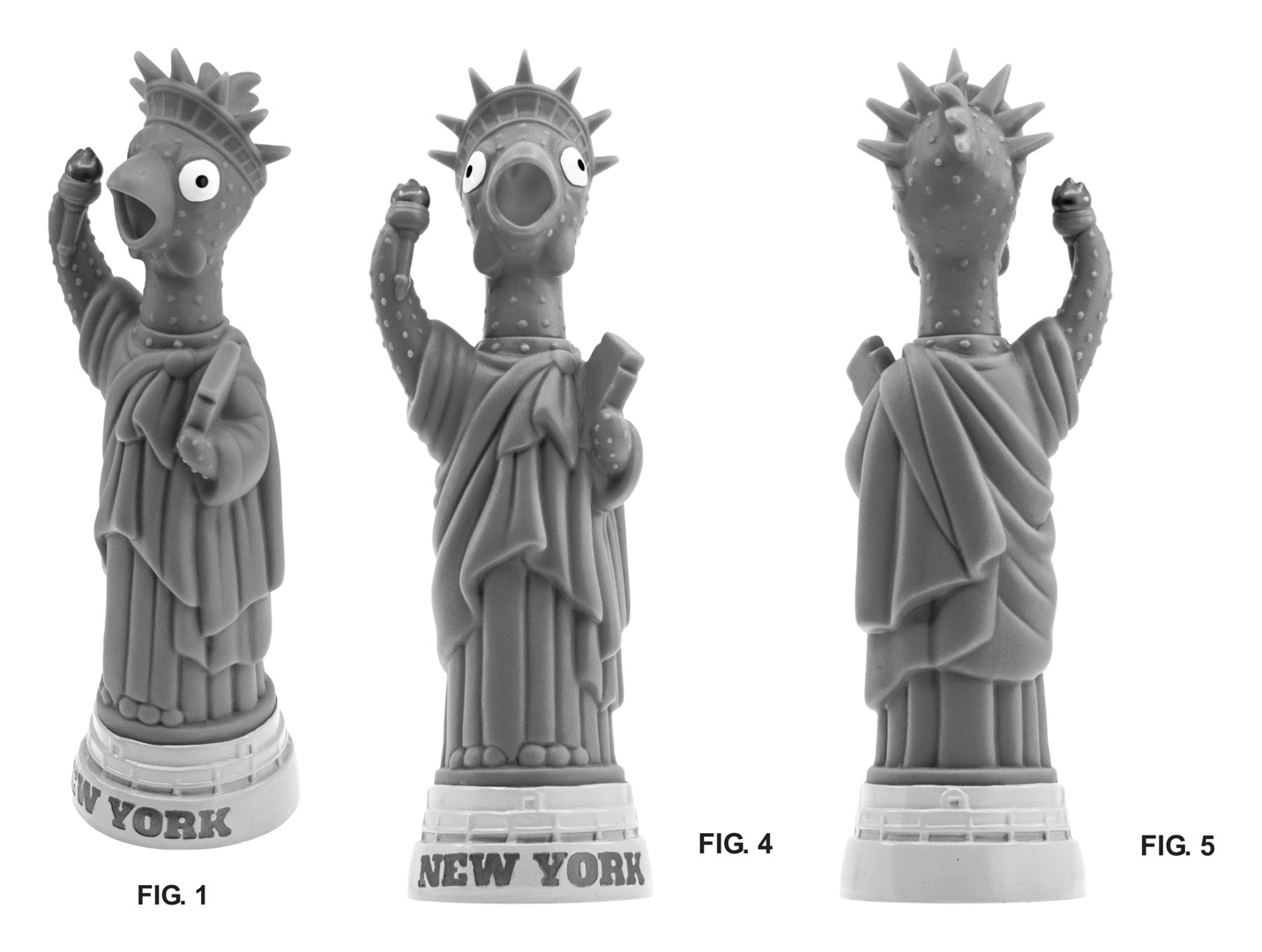
In cases like this—textiles, organic patterns, or highly detailed ornamentation—a photograph captures the reality of the design better than a pen ever could.
The Cost Factor
Because highly complex drawings require hours of manual labor by a skilled illustrator, the costs can add up. By swapping the pen for a lens, we can often reduce the turnaround time and cost for the client.
"Cheaper" does not mean "easy." You cannot simply snap a picture with your iPhone on a kitchen table and file it. The USPTO holds photographs to the same rigorous standards of consistency and clarity as line drawings. Failing to meet these standards will lead to an immediate rejection.
Best Practices for Patent Photography
If you decide that photographs are the right route for your application, strict adherence to these best practices is required to avoid rejection.
1. The "No-Background" Rule
The single most common reason for rejection is background clutter. The USPTO requires that the design be shown against a neutral background, and ideally, the background should be removed entirely (pure white). Shadows cast by the object onto the table are generally not allowed unless they are unavoidable and do not obscure the design.
2. Lighting is Critical
Lighting must be diffuse and even. Harsh glares or "hot spots" (bright white reflections) can obscure surface details. If a glare hides a contour, you have failed to disclose the design, and the patent is invalid. At Artworks IP, we use specialized lighting setups to ensure matte, even illumination that reveals every detail without washing out the image.
3. Orthographic Fidelity
This is the most commonly underestimated rule in patent photography, and it causes more rejections than any other single factor. Design patents require a complete set of orthographic views: Front, Back, Top, Bottom, Left, Right, plus at least one Perspective view. Orthographic means the camera must be perpendicular to the face being photographed, with no lens distortion and no convergence of parallel lines toward a vanishing point.
A casual snapshot almost always fails this test. Consumer lenses introduce barrel distortion at the edges. Shooting from even a few degrees off-axis foreshortens the face being photographed. Close-range photography exaggerates the nearer portions of the object and shrinks the farther ones. Each of these errors causes the photographed view to disagree with the other views — and the examiner rejects the application as indefinite.
The compliant workflow requires four specific controls: a long focal length (to minimize perspective compression), a camera locked perpendicular to each face, a turntable to maintain consistent distance across views, and post-capture correction to straighten any residual distortion. This is the same geometric discipline that a line-drawing illustrator enforces manually with a T-square and a drafting grid — only now it happens between the shutter click and the file submission.
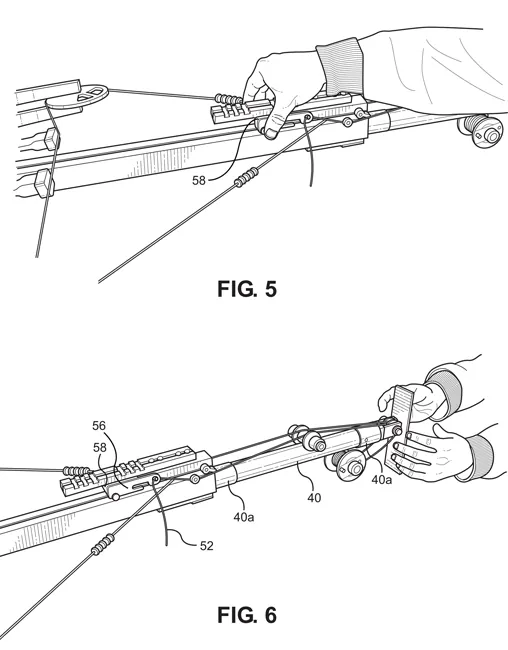
4. Shadows, Reflections, and Noise
One more point that catches almost every first-time filer. The USPTO treats everything visible in the photograph as part of the disclosure. A shadow cast onto a curved surface can be read as a physical crease. A specular highlight on a polished metal part can be read as a ridge. Dust, fingerprints, or stray fibers on a textile become — in the examiner’s eyes — part of the claimed design. At Artworks IP, we control the lighting geometry, polarize out reflections where needed, and clean every image in post so that nothing extraneous ends up in the claim.
Cost, Speed, and When to Choose Photos
Photographs can save time and money for the right design — usually a product with complex, irregular, or textured surfaces that would take dozens of hours to render by pen. They are rarely the cheap option for a simple geometric object, because the photography-plus-post-processing overhead often exceeds the cost of a clean line drawing.
The decision is rarely either/or. We frequently produce hybrid packages: photographs for the textured faces, line drawings for the geometric faces, with registration controlled across both. The examiner accepts this as long as the two styles don’t contradict each other within a single view.
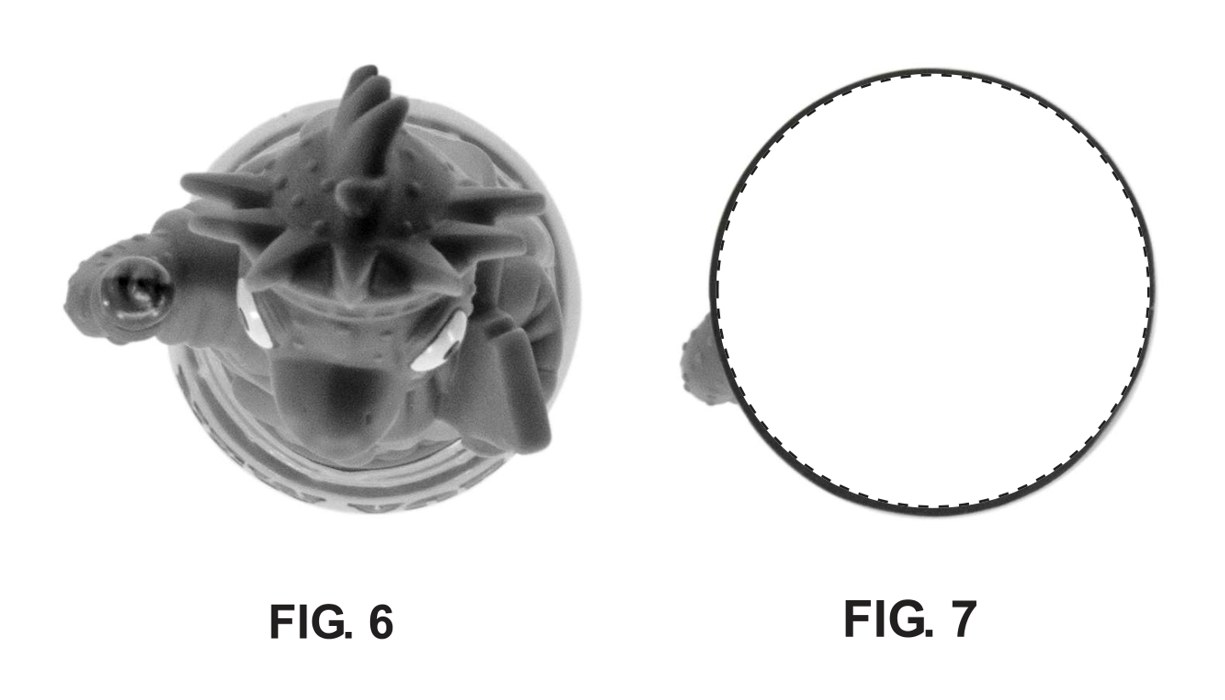
We provide professional photography and post-processing services to transform your physical product into a complete set of USPTO-compliant design patent drawings — or a hybrid package if that’s the right fit. Contact Artworks IP to discuss your design patent photography needs.